
GREENLINK
ENERGY
PROJECT
OVERVIEW
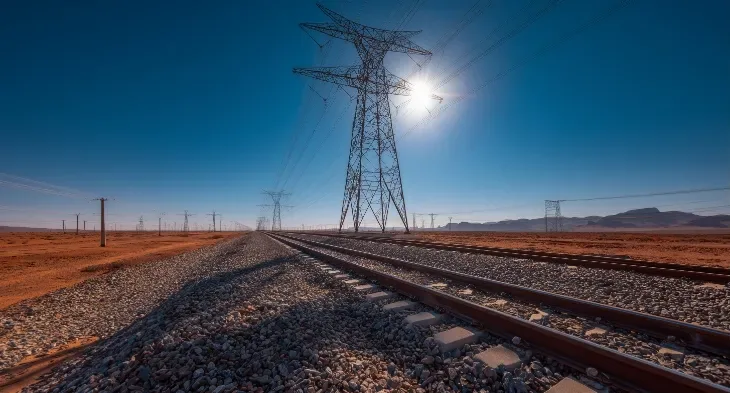
With a total length of approximately 450 kilometers, GreenLink is one of Africa’s most ambitious infrastructure projects. The corridor connects the power generation site in the Northern Cape with the industrial and urban centers of the Western Cape.
It is the link between the four major projects of the cKAHRE Renewable Energy Group and enables the transport of green electricity, hydrogen, ammonia, water and data – all along a common, state-of-the-art route.
This makes GreenLink the strategic lifeline of the South African hydrogen and energy industry: it creates security of supply, opens up export routes and connects regions.
OBJECTIVE
To build an integrated, CO₂-neutral development axis between energy production, industry, urban development, and export logistics – an infrastructure project that combines ecological, economic, and social progress.
CORE COMPONENTS
A multifunctional
infrastructure corridor
GreenLink has a modular design and combines multiple pipeline and utility systems into a single, coordinated
route structure.
This creates an efficient, cost-effective, and sustainable overall system that leverages synergies between energy, water, industry, and communications.
This integration of several systems into a common route reduces environmental impacts, simplifies approval processes, and enables resource-efficient implementation – a first in African infrastructure planning.
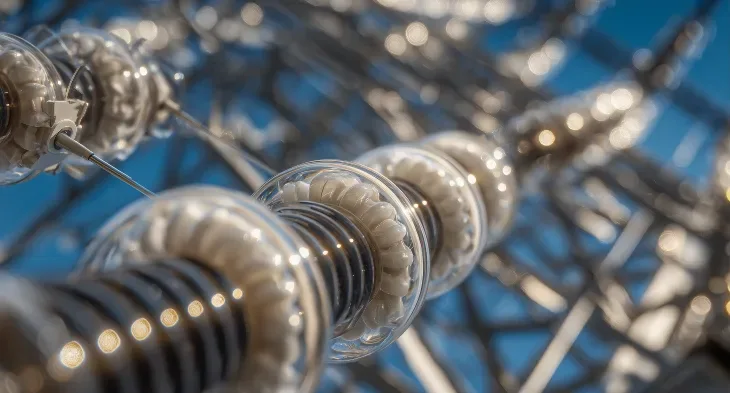
High-voltage power
line (HV Corridor)
- – Transmission of up to 20 GW of solar and wind power from the Northern Cape to the Western Cape.
- – Construction of switching and transformer stations along the route.
- – Integration into the national electricity grid (Eskom Grid).
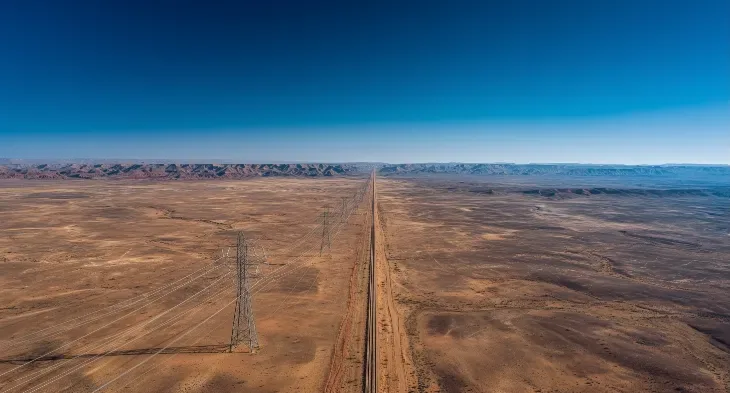
Hydrogen and
ammonia pipelines
- – Double-train system for pure hydrogen and liquefied ammonia.
- – Connection between production sites (KTE.energy) and export terminals (Velddrif / Saldanha Bay).
- – Prepared interfaces for future industrial users and PtX clusters.
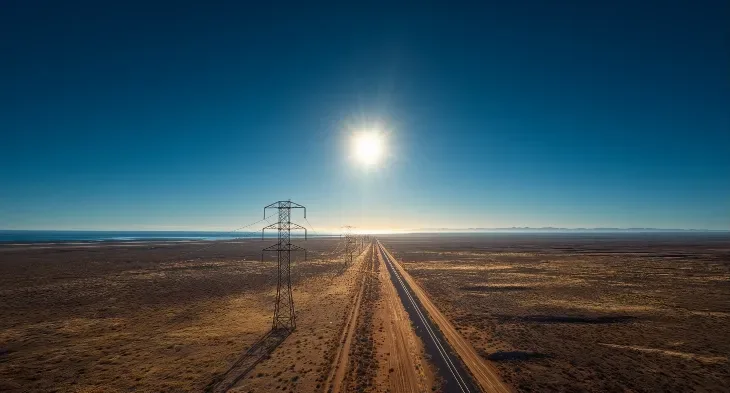
WATER PIPLINE
- – Transport of desalinated water from the West Coast (Velddrif Water & Power) back to the arid regions of the Northern Cape.
- – Securing water supplies for electrolyzers and communities along the route.
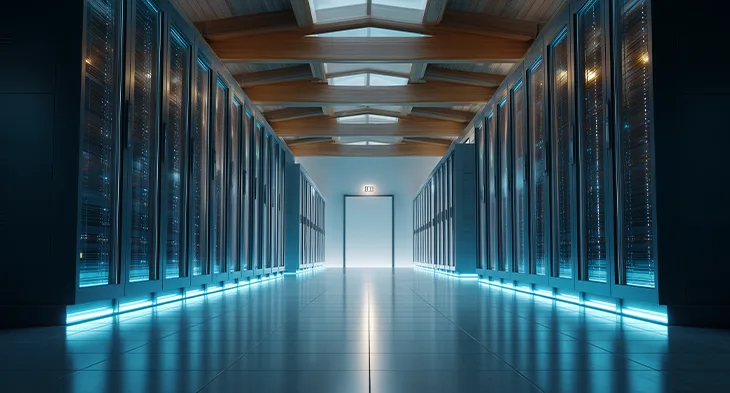
Data and fiber optic
network (Digital Corridor)
- – Parallel fiber optic cable for high-speed communication and energy monitoring.
- – Construction of switching and transformer stations along the route.
- – Basis for intelligent, digitally controlled energy systems.
Transport and service
infrastructure
- – Maintenance roads, service stations, control centers and security zones.
- – Combination of energy, logistics and communications infrastructure in a harmonized spatial structure.
INFRASTRUCTURE
WITH A FUTURE
Modular expansion in phases
GreenLink will be implemented in several phases to optimally coordinate investment, demand and technological developments.
Phase 1
(2025–2028)
- – Planning, environmental and construction preparation.
- – Construction of the first power line and data line.
- – Integration of the GreenLink basic infrastructure with the KTE.energy network.
Phase 2
(2029-2032)
- – Expansion to include hydrogen and ammonia pipelines.
- – Construction of pumping, compression
and control stations. - – Networking with the Velddrif projects Water
and Power and EcoVision Velddrif.
Phase 3
(2032-2040)
- – Completion of the dual corridor system (energy and water).
- – Integration of additional industrial users and export hubs.
- – Scaling to the national energy and hydrogen network.
Technological features
Smart grid integration for real-time monitoring of load flows.
Intelligent sensors for leak and pressure monitoring in pipelines.
Autonomous maintenance vehicles and drone monitoring for maximum operational safety.
Renewable energy supply for all pumping and control stations.
Sustainable route management with biodiversity and erosion protection programs.

Economic and social significance
An infrastructure project
with national impact
GreenLink is more than just connecting two locations—it’s a national development project. It strengthens the economy, creates new jobs, promotes technological expertise, and connects regions into a common energy market.
Technological features
Creation of up to 5,000 jobs in construction.
Development of local supply chains for steel, concrete, sensors and IT infrastructure.
Attracting investments in industrial parks, energy-intensive production and research facilities.
Reduction of transport and distribution losses through direct energy connections.
Value creation through energy exports via the ports of Saldanha Bay and Cape Town.
Social effects
Strengthening regional integration between the Northern Cape and the Western Cape.
Expansion of water supply along the corridor through recirculation of desalinated water.
Education and training initiatives in technology, logistics and IT.
Reduction of transport and distribution losses through direct energy connections.
Improving digital connectivity for rural communities.
GreenLink doesn’t just connect provinces – it connects people, markets and opportunities.
THE PROJECT IN NUMBERS
FACTS AND FIGURES
Approximately
450 KM
TOTAL
LENGTH
UP TO
20 GW
POWER TRANSMISSION
CAPACTY
FROM
2025
To 2040 PROJECT PHASES
UP TO
5000
JOB directly and
indirectly
Course – Northern Cape ↔ Western Cape.
Function – High-voltage, hydrogen, ammonia, water and data corridor.
Pipeline Capacity – Hydrogen / ammonia transport on an industrial scale.
Water Transportation – Desalinated seawater to supply arid regions.
GOAL AND MEANING
Establishment of a CO₂-neutral development axis between energy and industry. National infrastructure of strategic importance (SIP status expected).
STRATEGIC IMPORTANCE
National
Infrastructure
plan 2050
GreenLink is an integral part of the South African Hydrogen Society Roadmap (HSRM) and the National Infrastructure Plan 2050.
It is coordinated with government agencies, research institutions, and private stakeholders to connect national and international energy and export strategies.